
What is the life cycle of the Asian hornet?
The colony is annual. A foundress leaves hibernation in late winter and builds a small primary nest. The colony grows through spring, often moves to a secondary nest in summer, peaks between August and October, produces future queens in autumn, then dies at the first frosts. The nest is never reused.
Written by the Report Hornet teamEditorial method
What happens through the year?
The cycle always follows the same sequence, shifting by a few weeks with local climate and the year.
| Period | Stage | What is visible |
|---|---|---|
| February to April | Foundresses emerge | Lone hornets on the first blossom |
| March to May | Primary nest | Sphere the size of an orange, sheltered and low |
| May to July | Growth, often relocation | A secondary nest is built, frequently high up |
| August to October | Colony peak | Large nest, maximum pressure on hives |
| September to November | Sexuals produced | Future foundresses and males leaving the nest |
| December to February | Colony dies | Empty nest, visible once leaves have fallen |
Why does the colony change nest?
Because the primary nest becomes too small. Built in a sheltered spot, often under an eave or in a garden shed, it cannot hold a colony that numbers several thousand individuals by late summer.
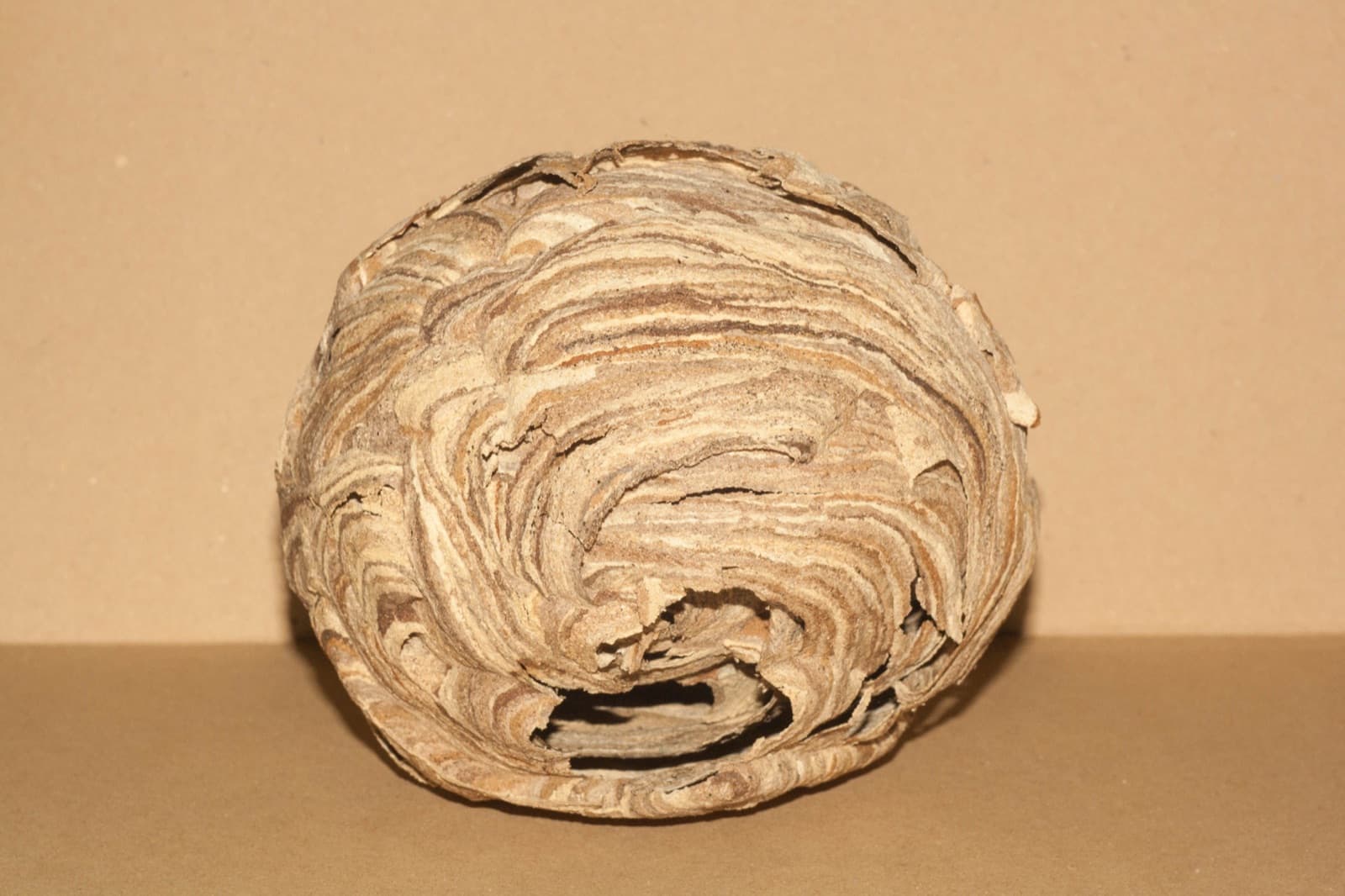
The colony then builds a secondary nest, frequently more than ten metres up a tree. That is why so many nests are only found in November, when the leaves drop: they had been there since summer.
When is monitoring most useful?
In spring, because a primary nest spotted early means a small colony, simpler and cheaper to neutralise. A nest reported in May prevents a nest of several thousand individuals in September.
The second useful window is autumn, around apiaries, when predation pressure peaks and protecting bee colonies becomes the priority.
A nest found in winter needs no intervention: the colony is already dead and the species never reoccupies an old nest.
Frequently asked questions
How many individuals does a colony hold?
Several thousand workers at the seasonal peak for a mature nest, producing hundreds of future foundresses in autumn. Only a very small share of them will survive the winter and found a colony.
Can a nest be used two years running?
No. The nest is abandoned when the colony dies and breaks down over winter. Activity at the same spot the following year means a new colony, not the old one restarting.
When is the Asian hornet most aggressive?
In late summer and autumn, when the colony is largest and most sensitive to disturbance. That is also when secondary nests, until then hidden by foliage, become visible.